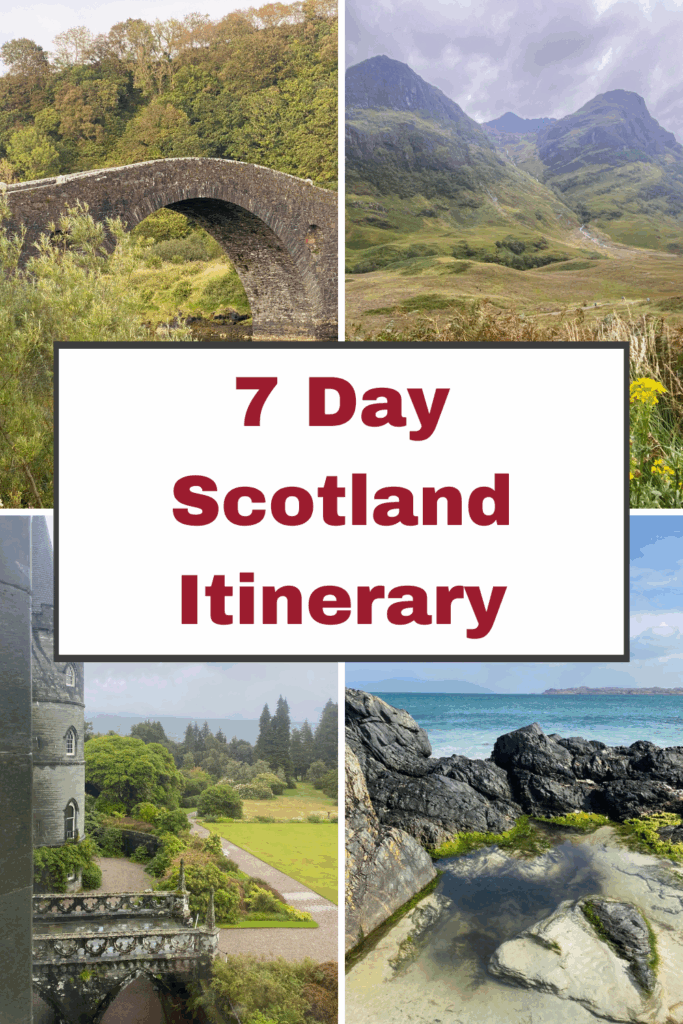
7 Day Scotland Itinerary Starting in Edinburgh: A Perfect Highlands and Islands Road Trip

Scotland is one of those rare places where every turn in the road feels like a new discovery. My 7 day Scotland itinerary is designed for travelers who want to experience a mix of energy and calm.
You’ll start in Edinburgh, then make your way to the coast in Oban before settling into the mountains near Glencoe. The route keeps driving time reasonable while still giving you access to major sights and dramatic scenery. You’ll end your week back in Edinburgh to make transportation links easy.
If you’ve been unsure how to fit Scotland’s highlights into a single week without rushing, this itinerary will help you plan a comfortable route with room to breathe.
This article contains affiliate links, which means that I may earn a small commission when you make a purchase. Affiliate links cost you nothing to use, and they help keep my content free – a win-win! For more information, see the affiliate disclosure.
Know Before You Go: Scotland
🏨 Edinburgh hotel pick: Stay within easy walking distance of Old Town and Edinburgh Waverley at The Scotsman Hotel, a historic property set in the former newspaper offices with views over the city.
🌊 Oban hotel pick: For your coastal base, Perle Oban Hotel sits right across from the harbor, ideal for early ferries to Mull or Easdale.
⛰ Glencoe / Fort William hotel pick: Settle into the Highlands at The Cruachan Hotel in Fort William, a convenient base for Glencoe, Glenfinnan, and local walks.
🚗 Car rental: Pick up your rental car in Edinburgh before leaving the city. I use Discover Cars to compare prices and book with reputable companies.
7 Day Scotland Itinerary Map
Here are the highlights of your one week visit to Scotland. Our major stops include:
- Edinburgh
- Stirling
- Oban
- Glencoe
- Glenfinnan
Day 1: Arrive in Edinburgh and Settle In
Edinburgh is one of the easiest cities in the UK to ease into after a long flight. Once you check in at your hotel, head straight outside for a first look at Old Town. The Royal Mile is an ideal place to start, with narrow closes, stone buildings, and convenient shops in case you forgot to pack anything essential.

If you have the energy, walk toward St Giles Cathedral and continue down to the colorful curve of Victoria Street. Both are close to the Royal Mile and easy to explore without a map.
For dinner, I like Howies on Victoria Street. It’s cozy, relaxed, and a great introduction to Scottish classics without feeling overly formal.
Day 2: Edinburgh to Oban With a Stop in Stirling
I recommend picking up your rental car from Edinburgh airport. This will not only give you a wide choice of rental agencies, it will mean starting your journey outside of the hectic city centre.
From here, start your journey with a short drive to Stirling. From Edinburgh airport, you’ll be in Stirling in less than 45 minutes.

Begin your visit at Stirling Castle, one of Scotland’s most important historic landmarks. Its hilltop setting gives you wide views over the countryside and an easy sense of why this site shaped so much of Scotland’s past.
For a deeper dive into this area’s fascinating history, consider a walking tour through Stirling’s Old Town.
After exploring Stirling, start the drive west toward Oban. The scenery becomes more dramatic as you move into the Highlands. If time allows, make a brief stop at the Kilchurn Castle viewpoint along Loch Awe. It’s an easy detour and one of the most striking castle ruins in the region.
Arrive in Oban by late afternoon and settle into your hotel. If you make it into town early enough, consider booking a tour at Oban Distillery. The distillery sits right in the center of town and offers a closer look at one of Scotland’s oldest producers.
↳ Book your Oban Distillery tour

One of the things I love about staying in Oban is watching the town settle as day visitors head out for the night. Have dinner near the harbor and cap your day with a walk near the waterfront to enjoy the quiet side of Oban most people miss.
Day 3: Day Trip to the Hebrides
Oban is one of the best departure points in Scotland for exploring the Hebrides. Ferries leave right from the harbor, and several guided tours make it easy to experience multiple islands in a single day without worrying about logistics.
I’ve explored several of the islands near Oban and have two options for your day depending on your energy level. You can’t go wrong exploring Scotland’s island landscapes.
Option 1: Guided Tour to Mull, Iona, and Staffa

If you want a full, memorable day with minimal planning, do what we did and join a guided tour that combines Mull, Iona, and Staffa. This route covers three very different islands in one trip:
- Mull offers sweeping coastal views and colorful harbor towns. On our tour we mostly saw Mull on our way out to Iona, but it was lovely and we even spotted Highland cows munching seaweed during low tide.
- Iona is known for its historic abbey and peaceful atmosphere. The beaches on this island look straight out of the Caribbean.
- Staffa is famous for Fingal’s Cave, with geometric basalt columns and a dramatic coastline. The island is also home to huge groups of seabirds, including some very cute puffins in the early summer.
We originally planned to visit Mull on our own but missed getting a ferry ticket that would let us bring our car across. I actually think this was for the best because of the long stretches of single track roads. Going on our own would have been a recipe for stress on what should be a fun day exploring.

Going on a guided tour meant we could hand off the driving stress to a local and manage to see as much as possible along our journey. If you’re joining a guided tour, all ferry tickets are included. For independent travel to Mull or Iona in summer, advance ferry bookings are a necessity.
Option 2: Slow Travel and Nature Exploring on Easdale Island
For a quieter day that still gets you off the mainland, take the short drive from Oban to Ellenabeich and hop on the tiny passenger ferry to Easdale Island. On the way, you’ll cross the 18th century Clachan Bridge onto the island of Seil.

We really enjoyed our visit to Easdale, taking the teeny ferry boat that felt more like having a friend pick us up in their personal boat.
Once on Easdale, there are no cars, no crowds, just a compact island with former slate quarries, coastal paths, and a small museum. It’s a perfect choice if you prefer slower travel, minimal structure, and a destination more removed from the usual tourist route.

You can walk the whole island in under an hour, but we lingered longer. We loved the views, time spent skipping stones at an old quarry, and the feeling of finding a place that is remote but still very much lived in.
To add a bit more adventure to your day, plan ahead with a hidden gem we were thrilled to stumble upon.
Seafari Adventures take small groups out on nature and wildlife sighting boat tours from the same dock used by the Easdale ferry. We went to experience the Corryvreckan Whirlpool, one of the world’s rare naturally occurring sea whirlpools. We also saw red deer, incredible bird life, seals and even dolphins!
However you spend your day, stop into the Tigh an Truish pub just before crossing back over the Clachan Bridge for a delicious meal in a historic spot.
Day 4: Oban to Fort William and Glencoe (With a Stop at Inveraray Castle)
Today’s drive takes you from the coast of Oban into the heart of the Highlands, with an optional detour to one of Scotland’s most beautiful stately homes. Leaving Oban, follow the road south along the shoreline before looping inland toward Inveraray, a postcard-perfect town overlooking Loch Fyne.

We stopped here to visit Inveraray Castle, the seat of the Duke of Argyll and an impressive example of 18th-century architecture.
The interior is richly furnished and was a pleasure to wander through. The outside is even more impressive, and good weather should find you wandering the surrounding parkland with views of the turrets rising above the trees.
Travel Tip: Inveraray Castle’s interior is typically open from April through October. If you’re visiting outside these months, the grounds and village are still beautiful places to explore.
After exploring the castle, continue north toward Fort William. The road climbs gradually, and the scenery becomes more dramatic with every mile. If you’re looking for another quick break, stop at the Castle Stalker viewpoint. The castle sits alone on a small tidal island and is especially photogenic in the afternoon light.
Once in Fort William, stretch your legs with a stroll down the high street or head over to the waterfront to watch the light change over the water. For a unique pub dinner, check out The Grog + Gruel on the high street.
Day 5: Visit Glencoe: Scotland’s Most Dramatic Valley
Glencoe is one of the most breathtaking places I’ve seen, comparable to the first time I saw Yosemite Valley in California. Today you’ll have the full day to explore this beautiful place.
Start at the Glencoe Visitor Centre, where you can get a sense of the valley’s history and pick up information about local walks. They also have a couple Highland cows in case you haven’t lucked into spotting these gentle creatures yet on your journey.

From there, continue driving deeper into the valley. There are plenty of easy to access car parks along the main road and we had a great time stopping as often as the scenery made us want to… which was pretty often.
If you want a short, rewarding walk, head to Signal Rock, linked to the MacDonald clan and the events surrounding the Glencoe Massacre. The trail is gentle and surrounded by thick forest that eventually opens to views of the valley.
Travel Tip: More experienced hikers can choose longer routes, but you don’t need a difficult trail to appreciate Glencoe’s beauty. Many of the best views are right along the main road.
Day 6: Explore Glenfinnan
Glenfinnan is one of the most scenic areas in the Highlands and makes an easy, rewarding day out from Fort William. Start at the visitor center and follow the short path to the Glenfinnan Viaduct viewpoint. This hillside walk is optional but offers the best view of the viaduct and the surrounding mountains.

If you time your visit well, you may see the Jacobite Steam Train crossing in front of you.
Travel Tip: If seeing the steam train is high on your wishlist, check the day’s timetable before you arrive. Crowds gather quickly around train times, so plan to reach the viewpoint early.
Afterward, walk down to the Glenfinnan Monument for a closer look at the tower and views over Loch Shiel. The shoreline here is calm and scenic, making it a nice place to pause before exploring the rest of the area.
Glenfinnan Railway Museum
If you’re traveling with kids, or prefer something indoors, stop at the small Glenfinnan Railway Museum next to the train station. It’s easy to navigate, filled with local rail history, and offers platform access for watching the steam train arrive without needing to hike to the viewpoint.
Church of St. Mary and St. Finnan
A few minutes’ drive from the monument, the Church of St. Mary and St. Finnan overlooks Loch Shiel and feels wonderfully removed from the crowds. The stained glass and peaceful setting make it a lovely hidden gem for a short, meaningful stop.
After your visit, return to Fort William for a relaxed evening and dinner in town.
Day 7: Return to Edinburgh
After a few days in the Highlands, the drive back to Edinburgh offers one last look at Scotland’s changing landscapes. Start your morning in Fort William and follow the road south toward Tyndrum. The route is straightforward, with mountain views gradually giving way to rolling hills as you approach the Lowlands.
If you want to break up the drive, stop at The Kelpies near Falkirk. These two massive steel sculptures of mythic horses rise out of the landscape and are easy to visit without a long detour. There’s a visitor center on site, but even a quick walk around the sculptures makes the stop worthwhile.

Continue on to Edinburgh and return your rental car before heading to your hotel. Your final evening is a chance to revisit a favorite spot from earlier in the trip or enjoy a relaxed dinner near Old Town. You might like to take one last walk along the Royal Mile, especially once the daytime crowds thin out.
What to Pack for a Scotland Road Trip
Scotland’s weather can shift quickly, even in summer, so packing with flexibility in mind makes the trip much more enjoyable. The key is to focus on layers and clothing that handles wind, rain, and cooler temperatures.
Bring a waterproof jacket, not just a water-resistant one. Even light rain can linger, especially in the Highlands.
A warm mid-layer, such as a fleece or lightweight sweater, helps on cooler mornings and evenings.
Comfortable walking shoes are your most important item to pack. You don’t need heavy hiking boots for this itinerary unless you plan to take on more challenging trails.
For driving days, pack a small tote or day bag that keeps essentials within reach. Scotland’s rural roads often mean long stretches without large shops, so carrying a reusable water bottle, snacks, and a portable charger is helpful.
A compact umbrella, sunglasses, and a hat cover a wide range of weather in a single day and can be left in the car when not needed.
If you’re visiting in summer, consider picking up midge repellent after you arrive. Midges can be common near lochs and wooded areas, and local brands tend to work better than what you can buy abroad.
How to Get Around Scotland
For this itinerary, driving is the easiest and most flexible way to get around. Public transportation connects many of Scotland’s major towns, but reaching places like Glencoe, Glenfinnan, and the Hebrides is much simpler by car.
Roads in the Highlands are well maintained, and the routes in this itinerary mostly avoid challenging single-track roads.
If you’re not comfortable driving in a busy city, set up your car rental from Edinburgh Airport. This option helps you skip Edinburgh’s narrow streets and make the start of your road trip calmer. Once you’re outside the city, the roads open up quickly and are straightforward to navigate.
Driving in Scotland may feel different at first, especially with roundabouts and left-side driving, but most visitors adjust within an hour or two.
Speed limits are clearly marked, and many rural roads have frequent pull-outs so faster cars can pass. Scotland’s drivers tend to be courteous, especially in areas with narrow lanes or other obstacles.
Travel Tip: If you’re unfamiliar with UK driving rules and roundabout navigation, get a primer before you set out with Tripiamo’s excellent and quick UK driving guide.
Parking is generally easy in Oban, Fort William, and the rural stops along this itinerary. Edinburgh has more restricted parking zones, which is why beginning and ending your rental outside the city often works best.
Best Time of Year for This Scotland Itinerary
You can follow this itinerary in any season, but the experience changes depending on when you visit. Summer offers the longest daylight hours and the warmest temperatures, but is also the busiest season. In summer, booking ferries and accommodations early is important.
Travel Tip: Even summers can sometimes be cool in the Highlands. We were glad for our light coats on our August trip out to the Hebrides.
Spring and fall bring cooler weather and fewer crowds. Landscapes can be especially beautiful in April and May when the hills turn bright green, and in late September when early autumn colors appear. These months also tend to have a good mix of daylight and quieter roads.
Winter is the quietest time to visit. Some sites may operate on reduced schedules or be closed for the season. The days are short, and weather can be unpredictable, but the scenery is still dramatic and the Highlands feel particularly peaceful.
Extend This Itinerary With a Visit to Skye
The Isle of Skye is one of Scotland’s most popular destinations, and it’s a great addition if you have one or two extra days. Its rugged cliffs and dramatic landscapes offer a different feel from the mainland.
Reaching Skye takes longer than many visitors expect, which is why I haven’t included it in the main 7-day route. Distances are significant, and the island’s best sights are spread out. To enjoy Skye without rushing, plan at least one overnight.

Base yourself in Portree, which has restaurants, tour departures, and easy access to the island’s highlights. A comfortable place to stay is the Cuillin Hills Hotel, set above Portree Bay.
Top sights include the Old Man of Storr, the Quiraing, and Kilt Rock. With extra time, you can also visit the Fairy Pools or drive out to Neist Point for coastal views.
FAQs about Visiting Scotland
May, June, and September are the best months to visit Scotland for a chance at mild weather and plenty of daylight hours. July and August are also lovely, but come with a lot more crowding, especially in Edinburgh.
I’d point to the Highlands as the most beautiful part of Scotland thanks to the area’s dramatic and sweeping views. For culture and architecture, Edinburgh is hard to beat. If you hate crowds and want to get off the beaten path with coastal scenery, the Hebrides offer some of the country’s most memorable and often overlooked landscapes.
The best way to see Scotland is by renting a car, especially if you want to visit the Highlands or islands. Driving gives you the most flexibility. If you prefer not to drive, trains and buses connect major towns, and guided tours can help you reach more remote destinations. A mix of public transport in cities and a rental car for rural areas works well.
Scotland can be moderately expensive, especially during summer when hotels and tours are in high demand. You can keep costs manageable by visiting in shoulder season and booking accommodations early. Many of Scotland’s experiences, like scenic drives and hikes, are free.
Why Visit Scotland
Scotland is a place where history and landscape collide in dramatic ways. In Edinburgh, a castle rises out of volcanic rock right in the middle of the city. An hour later, you can be standing in Stirling, surrounded by stories of kings, battles, and sweeping countryside.
Keep driving west and the scenery shifts again. Hills grow steeper. Valleys open wide. By the time you reach Glencoe, the landscape feels almost unreal, shaped by deep glacial cuts and towering peaks that seem to appear out of nowhere.
A one-week trip is the ideal way to experience all of this without exhausting travel days. My favorite Scottish trips have always been highlighted by slow travel. You don’t want to rush your time here.
Pin this post for later!