
15 Things No One Tells You About Visiting London
Sometimes, planning a trip to London feels a bit like planning a trip to Disneyland. There are so many things to do, lots of opinions about what’s worthwhile, and a few things that can ruin your trip if you don’t know about them.
After years wandering this city on my own and with visiting friends, I’ve figured out a lot of the things that tend to take visitors by surprise. These 15 things no one tells you before you visit London are the things I always share to help my friends have an incredible first visit.
This article contains affiliate links, which means that I may earn a small commission when you make a purchase. Affiliate links cost you nothing to use, and they help keep my content free – a win-win! For more information, see the affiliate disclosure.
Know Before You Go: London
🛎️ Top Hotel Pick: For a central, walkable base, I recommend the Radisson Blu Mercer Street in Covent Garden.
🚶♀️Best London Walking Tour: Don’t miss the Secrets of Old London tour for an entertaining look at London’s medieval and Tudor past.
🎭 Theatre tickets: I find the best prices and show availability on the West End with London Theatre Direct.
15 Things No One Tells You About Visiting London
Without further ado, here are the 15 things I wish I’d known before I visited London the first time.
1. You need to pre-plan getting from the airport to your hotel
When you are stepping off a long plane journey with your brain scrambled from jet-lag, you do not want to be confused about where to go next. Each of London’s airports are connected to central areas, but how you get there can vary.
For the two biggest airports, Heathrow and Gatwick, you can easily take a train into central London. If you want the ease of a taxi to deliver you directly to your hotel, try to book this in advance as the cost for a ride can easily exceed £50 from any of London’s airports.
Travel Tip: My preferred routes into London are the Elizabeth Line from Heathrow or the Gatwick Express from Gatwick. If either of these are convenient to your hotel, I find they’re the best balance of low stress and reasonable cost.
Use Google Maps or a similar app to find the best transit route to your hotel before you leave, so you aren’t figuring it out for the first time in the airport. Even better, do this when you’re booking your hotel so you don’t accidentally book a place that’s a pain to get to.
2. Where you stay makes a big difference to your trip
Picking a place that’s convenient to reach from the airport is step one. After that, you want to be able to easily get around for sightseeing without breaking the bank on price.
In London, these goals can be hard to reach. The city is huge and you can find accommodation that has direct views of Big Ben just as easily as those in far flung neighborhoods where tourists never bother to go.
Try to avoid the temptation to book cheap accommodation without considering where it is located in London. Tacking on extra travel costs and commute time can turn your first London trip into an overly tiring nightmare.
For a full breakdown of my favorite areas, check out my complete guide to where to stay in London for first-time visitors.
Otherwise, here are my quick picks:
| Easiest to reach from Heathrow | Paddington |
| Most central | Covent Garden |
| Best with kids | South Kensington |
| Quieter central areas | Bloomsbury or Mayfair |
3. Your hotel room might be tiny
You know your standard American hotel room? The one with two queen beds and maybe a converting sofa along the wall? Yeah, that doesn’t exist here.
Hotel rooms in London are teeny by US standards. Even the major chains are often capped at double occupancy, with just enough space for a bed slightly smaller than a US queen. Meanwhile, there’s no air conditioning and the elevator holds one person at a time with luggage. When you’re spending £150+ per night, this can come as a shock.
American visitors can sometimes miss out on what their hotel will be like until they arrive, when it’s too late to make changes. I recommend checking out room photos and reading the amenity list at a minimum before booking so you have an accurate idea of what to expect.
Small rooms can also make travel with a group or as a family extra challenging. Vacation rentals can be a helpful solution, but I caution you to be extra vigilant about the location and reading prior reviews before you commit. Rental scams do exist, and even legitimate listings can leave you in a residential neighborhood that’s a 20 minute walk from the nearest Tube station.
If you’re traveling as a family, don’t miss my guide to where to stay in London with kids for the best neighborhoods and hotels that can accommodate family travelers.
4. Londoners are polite… until you stand on the left on a Tube escalator
British people are very polite, but there are a few unwritten rules in London that locals take very seriously. The one I most often see tourists on the wrong end of is standing on the left-hand side of an escalator in a Tube station.
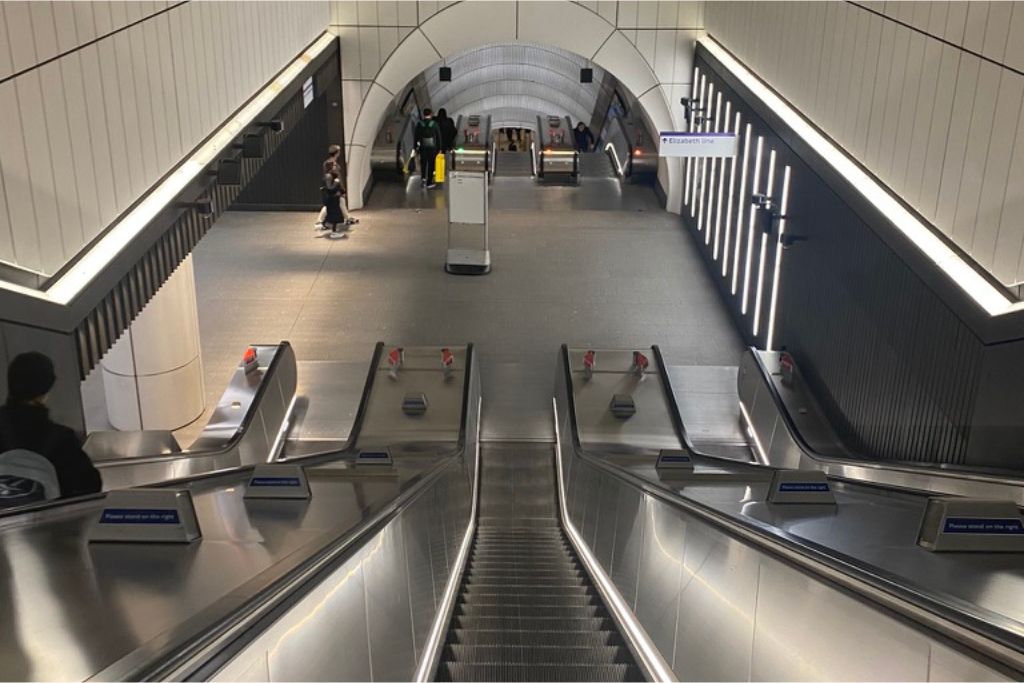
The rule here is pretty straightforward and you’ll often see signs reminding you of it. In short, stand with your bags on the right so that people in a hurry can walk on the left.
Failing to follow this rule will most likely lead to an exasperated commuter saying “sorry” in the least apologetic tone you’ve ever heard while they glare until you get out of the way. It’s not that they’re trying to be rude, it’s just that they have somewhere to be and aren’t on vacation time.
A couple more Tube etiquette tips to bear in mind are:
- Have your payment method ready before you reach the entrance/exit gates.
- Let people off the train before you try to board.
- Step to the side of the walkway before you stop to check directions.
5. You probably don’t need an Oyster card
The first time I visited London I was excited to get an Oyster card. This prepaid card is scanned at the Tube gates and on buses for quick and easy payment. As a teenager I felt very grown-up having my own dedicated payment card to get around.
These days, transport payment can be made with any tap-to-pay service through a phone app or by tapping your payment card. Simply tap on the yellow pad at Tube gates or at the front entrance to a bus.
Oyster cards still exist (and are still a nice to have for responsible young visitors), but it’s no longer necessary to purchase one.
Travel Tip: Use the same card to pay for all of your transport charges. Fares are capped daily and using the same card will make sure you aren’t charged more than the daily cap for your travel.
6. Walking is the best way to explore London
When I first visited London, I remember being excited to take the Tube. I’ve never been a big fan of driving and this was my first big city visit to a place where a car was unnecessary.
I still think the Tube is fantastic and appreciate that I don’t need to bring my acquired driving-on-the-left skills into town with me. However, it is possible to rely on the Tube too much and regret it.
Probably the only thing stranger to the American mind than effective public transportation is the idea that you can walk for miles safely. In London, you can.
It’s always a good idea to compare walk times with public transportation when you’re heading out in London. If the walk is reasonable and can fit into your schedule, do it.
So much of London is best experienced by accident. Walking means you get a chance to actually see the city, instead of hustling between the most crowded tourist spots.
7. It’s easy to overpack your days
London makes it way too easy to pack in more than you can feasibly see in one trip. There is simply no way to “see it all,” which is part of what makes London a place people return to over and over again.
One way I often see visitors overpacking their days is by assuming they’ll only spend an hour or two in a major attraction. It’s likely that you’ll need more time, and up to the whole day for big highlights like the Tower of London or British Museum.

My rule of thumb is to plan a maximum of two major attractions per day. For example, I’d spend all morning at the Tower of London and catch a late tour of Shakespeare’s Globe Theatre, with a walk along the Thames and wander through Borough Market on the way.
Museums in general can be draining unless you are very into them. For big ones like the British Museum, I recommend looking at the website in advance to help plan out what you most want to see. That way you can prioritize your visit stops to those items before you burn out.
One of the great things about London is that it’s easy to mix together a museum or historic site with some shopping or a leisurely pub stop.
Don’t be the person telling me they didn’t enjoy their London trip because it was too hectic and they couldn’t find time to enjoy the city. Slow down so that you have time to appreciate your trip.
8. You don’t need to pre-book everything, but should for some spots
A lot of the people I talk to before their London trip either assume that they need to book an appointment for every little thing they want to do, or that they can wing it to everything without any bookings.
The best way forward actually lies in the middle. You definitely don’t need to pre-book every London attraction, but some can be hard to visit if you don’t book in advance.
Try to avoid booking too many appointments on the same day. Much like my advice to avoid overpacking your day, you don’t want to be stressed or cut another attraction short trying to make it in time for a reservation.
These are the spots I would pre-book if they are high up your visit wish list:
- Tower of London (can sell out at peak times and the available entry times may not align with your plans if you want until the day to purchase)
- Westminster Abbey (sells out in peak periods like summer months)
- The British Museum (free entry, but requires a timed ticket booked on their website)
- Warner Bros. Studio Tour (extremely popular attraction that often sells out months in advance, and needs transport sorted as it’s outside central London)
- Afternoon tea (if you have your heart set on a popular setting like Aqua Shard or One Aldwych)
- Buckingham Palace State Rooms (only open in the summer and sells out every year)
Most other attractions usually have tickets available for walk-up visitors, even popular spots like St. Paul’s Cathedral.
To make the most of your time, balance each day with one pre-booked attraction and then spend the rest of your time exploring nearby sights that you don’t have to pre-book.
9. London has amazing food, but you won’t find it everywhere
Maybe you’ve heard that British food is terrible? Lucky for you, this is definitely not the truth and London has tons of delicious British and international meals to choose from.
However, you should still be choosy about where you spend your dining fund. I try to stay away from tourist hotspots like Leicester Square and any restaurant that looks like its primary market is tourists. That’s a recipe for a mediocre meal.
A few places I have personally tried and love include:
- Fortitude Bakehouse in Bloomsbury for breakfast goodies
- Scarlett Green in Soho for brunch
- Pho in Covent Garden for a casual filling lunch
- Homeslice in Covent Garden for excellent pizza
- The Old Bank of England on Fleet Street for tasty pub food
- The Original Ivy in Covent Garden for exceptional food and potential celebrity sighting

I also recommend following your taste buds in areas like Seven Dials Market, Borough Market or Chinatown to discover treats perfect for a snack or light meal.
10. Afternoon tea isn’t worth it to everyone
I love a leisurely afternoon tea in a gorgeous setting, but my husband is not a fan. Half of the fussy foods are things he doesn’t enjoy eating and the experience can be incredibly expensive.
If you’re on the fence about whether or not to include afternoon tea on your London itinerary, let me be the one to give you permission to skip it. I only think it’s worthwhile if your entire travel group is really into the idea.
Most of the well-known afternoon tea spots charge over £70 per person. You don’t want to shell out that much for something you might not even enjoy.
For those who really want a nice cup of tea, but not all the extra bits and time commitment that come with a formal afternoon tea, order a cream tea. This is offered at many restaurants and cafes, as well as some of the swanky hotels that also do afternoon tea. A cream tea typically includes an individual pot of tea and either a scone or a slice of cake.
If you do want all the fuss, but aren’t sure about the steep prices, there are ways around that too. For example, going to the tea salon at Fortnum & Mason’s department store runs over £80. Going a bit off the tourist track to their location at the Royal Exchange gets you a comparable menu in a beautiful historic atrium for £45.
11. Pubs come in many forms
It’s hard to imagine a trip to London without stopping in at a local pub. Pubs have been a beloved part of the national lifestyle for centuries and continue to bridge old and new traditions.
While I’d put visiting a pub high on the list of things you should try on your London visit, keep in mind that not all pub experiences are the same.
Pubs are first and foremost a service to their local environment. This means that pubs near busy office environments like the City of London or Canary Wharf spill visitors out onto the surrounding streets during popular after work drinks hours. Meanwhile, you’ll find a cozy fire and tables for Sunday roast are the main draw at places like the Holly Bush in Hampstead.
Depending on what type of pub experience you’d like to enjoy, a little advanced research can help you find the right pub for you.
If you don’t drink alcohol, don’t assume the pub isn’t for you. Very few pubs are devoted boozers these days, with most serving food and soft drinks as often as ales. I’ve spent the afternoon sipping sodas while reading a book at my local.
12. It doesn’t rain all the time, but best to stay prepared
Before I moved to England, I heard all of the jokes from American friends that I’d only see rain and grey. This couldn’t be further from the truth. In fact, I think there are few places in the world better than London on a sunny day.
To be fair, my friends weren’t completely wrong. The weather here does have a habit of turning drizzly from time to time. I’ve found though, that an 80% rain forecast could just as easily mean overnight rain and a completely clear day. It could also mean a few hours of showers in the afternoon when the morning was blue skies.
As a visitor, the best advice I can give you is to be prepared. I am a huge fan of a waterproof jacket with a hood during most seasons, and a travel umbrella in my bag at a minimum during the summer.
When in doubt, be willing to stop for a bonus coffee if you need to escape indoors, or check out my rainy day in London guide for ways to keep exploring when the weather looks grim.
13. You can see many places near London on a day trip
I adore London, but I encourage everyone to explore beyond the city if your trip allows. Luckily, there is a treasure trove of day trip options for everything from British beaches to fairytale villages or ancient castles.
You can easily get off the tourist track by driving, but rail connections also make it easy to explore without ever getting behind the wheel. A few of my favorite no-car-needed day trips include:
- Oxford. This gorgeous university town has to be seen to be believed.
- Windsor. A must for royal family historians.
- Brighton. The seaside town so lovely I moved here myself. Perfect for a quirky day out.
- Bath. For my money the most beautiful city to visit on a day trip from London. Don’t miss the Roman Baths.
Be careful not to overpack your stay with day trips so you don’t get to enjoy London. I think a day trip is a perfect addition when you have five days or more to spend on your trip. If you’re only staying a few days, then London has more than enough to keep you busy.
14. London isn’t as accessible as you may expect
London is old and one area where this shows is in the infrastructure. This can create challenges for visitors with mobility limitations or those navigating with a child in a stroller.
Trains and the Underground have become more accessible over the years, but you won’t find step-free access at every station. It can also sometimes be a challenge to locate lifts (elevators), though they do exist at most stations.
Above ground, you’ll also encounter uneven pavements, historic buildings with steps and restaurants or pubs with bathrooms located downstairs.
If you’re travelling with someone who has mobility needs, it’s particularly important to research accessibility before your trip. Transport for London provides information about step-free stations and accessible journey planning, which can help you identify the best routes.
15. The history of London hides in plain sight
One of my favorite things about London is how much history you can simply stumble upon. Sections of London’s Roman wall sit beside modern buildings. A children’s playground sits atop an ancient graveyard.

It can seem a little crazy at times, but this city’s past just melds right in with the present. You don’t need a museum ticket to discover it, just a willingness to explore.
This is also why I really enjoy walking tours in London. With so many unique and unsung markers hiding in plain sight, it’s easy to miss things. If you want to learn more about London’s history without getting bored, one of my favorite tours is the Secret Old London tour.
One Last Thing No One Tells You About London
The more you explore London, the more you realize how much there is left to discover. Even after years of living in England and visiting regularly, I’m still finding new places to fall in love with.
My biggest advice for first-time visitors is to plan the important details, but leave yourself plenty of room to wander. Don’t get so caught up in checking famous attractions off your list that you miss the little moments that make London special.
And if you don’t manage to see everything on your first trip? That’s just a good excuse to come back!
FAQs for First-Time London Visitors
A lot. I typically exceed 10,000 steps on days I’m in London with visitors. There is a lot to see and even the steps needed to get in and out of Tube stations add up.
No. Cash is optional in London and just about everything can be paid for with a tap to pay card or mobile pay.
Trying to do too much! Don’t underestimate how long you’ll spend traveling between attractions or the time you’ll want to invest in the spots that appeal to you most. Leave space in your itinerary to wander to get the most out of your visit.
